


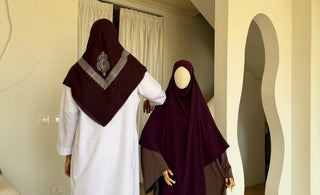
The qamis is one of those pieces you keep for a long time — provided you choose it well from the start. Cut, material, origin: we give you the markers to avoid mistakes.
1. The Cut: The Detail That Changes Everything
The cut defines both the style and comfort of the qamis. Three main types:
- The Saudi cut — straight and loose, with a standing collar. Discreet, timeless, suitable for all body types.
- The Emirati cut — wide sleeves, open V-neckline, more fluid drape. A style recognizable at first glance.
- The modern cut (shirt collar, fitted) — like our Qamis Talib Luxe, inspired by Western shirts, more suited to urban daily life.
2. The Material: What Makes the Difference Over Time
A qamis made from low-quality fabric loses its shape after a few washes. Points to check:
- Fabric weight — the denser it is, the more stable the drape and the longer the garment lasts.
- Fabric origin — Japanese fabrics (notably Toyobo) are known for their bright white that does not yellow and their resistance to repeated washing.
- Transparency — a good qamis is never transparent in the light, even in white.
Our Ta-If Luxe and Saoudi II Luxe qamis are made from Toyobo fabric imported from Japan for these exact reasons.
3. The Size: Why the Size Guide Is Essential
Qamis are not sized like t-shirts. A one-centimeter difference in shoulder width or length completely changes the drape. Two simple rules:
- Measure a qamis you already own and that fits well: total length, shoulder width, chest circumference.
- Compare these measurements to our size guide rather than your usual t-shirt size.
If you hesitate between two sizes, the smaller one is usually the right choice — a qamis that is too wide looks sloppy.
4. The Price: What You Are Really Paying For
For a premium qamis (around €80-120), you mainly pay for:
- The fabric (30-50% of the cost)
- Hand tailoring in a skilled workshop (40-50%)
- Logistics and quality control (10-20%)
Below €40, expect lighter fabric and industrial manufacturing. This is not necessarily bad, but the garment’s lifespan will be shorter.
5. Caring for Your Qamis to Keep It Long
Some simple rules:
- Wash at a maximum of 30°C, inside out, delicate cycle.
- No tumble drying — it weakens fibers and can shrink the garment.
- Iron at medium temperature, ideally inside out.
In Summary
A good qamis is recognized by its cut, fabric, and finishing — not by its displayed price. Take the time to check these points before buying, and you will have a piece that will accompany you for years.
To discover our selection, head to the full Qamis collection.